Daitoku-ji Zen Temple Complex
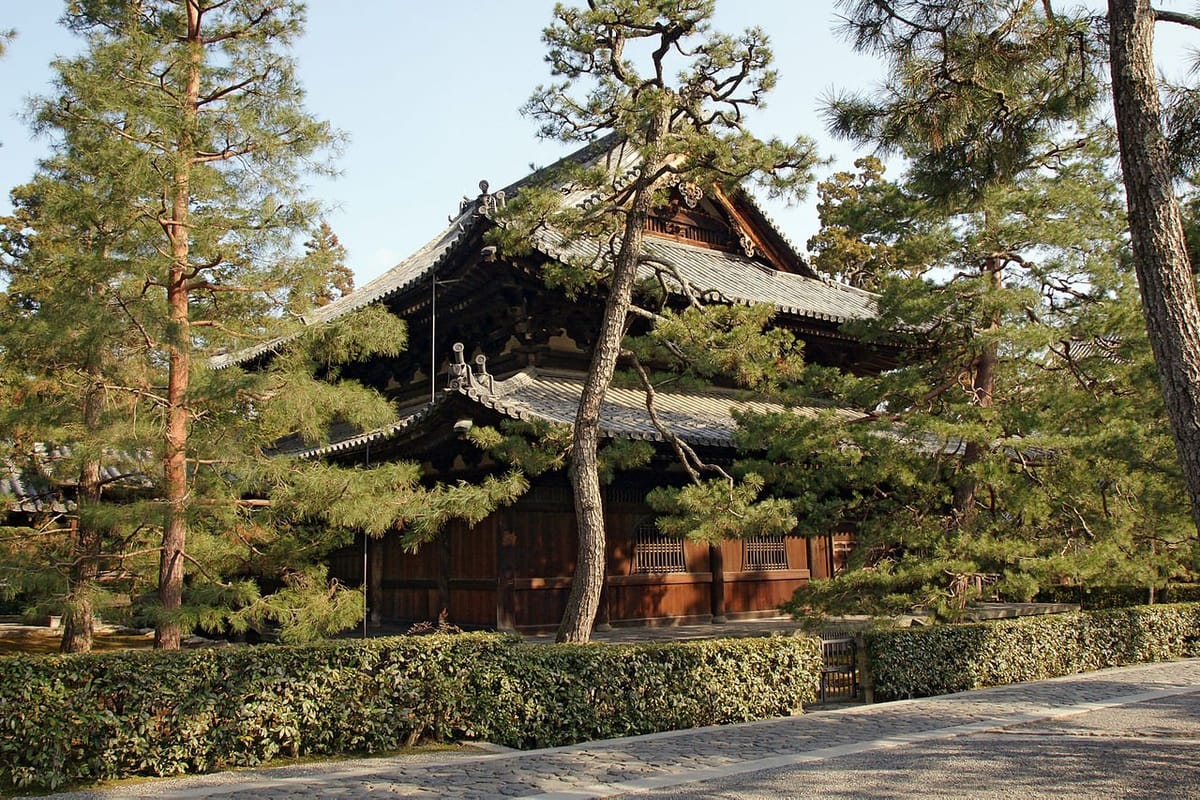
[caption id align="alignnone" width="1280"]

Daitokuji Butsuden - © 663highland [/caption]
Daitoku-ji, meaning 'Temple of Great Virtue,' is among the most significant Zen temple complexes in Kyoto. It spans approximately 23 hectares (57 acres) in the northern part of the city and belongs to the Rinzai school of Zen Buddhism, one of Japan's main Zen schools.
Founded in 1319 by the monk Shūhō Myōchō (also known as Daitō Kokushi) during the Kamakura period, Daitoku-ji initially started as a small Zen temple. It rose to prominence with support from the imperial court and shogunate. Zen temples like Daitoku-ji were not only spiritual centres — they also played a key role in the politics and culture of the era.
Today, Daitoku-ji is a walled complex made up of over 20 sub-temples, each with its own gardens, halls, and treasures. While many of these sub-temples are closed to the public, several are accessible on a rotating basis throughout the year, offering visitors a chance to discover something new each time! The complex is especially famous for its dry landscape gardens (karesansui), which beautifully embody Zen ideals of simplicity and tranquillity. Notable sub-temples open to visitors include Ryōgen-in, famous for having one of Japan's oldest Zen gardens, and Zuihō-in, known for its striking modern karesansui designs.
One of the most historically significant sub-temples is Sōken-in, founded in 1583 by Toyotomi Hideyoshi (豊臣 秀吉, 1537–1598) on the first anniversary of Oda Nobunaga's death. Nobunaga, a pivotal figure in Japan's unification, was assassinated in 1582 at Honnō-ji by his vassal Akechi Mitsuhide. Hideyoshi, once Nobunaga's sandal-bearer who rose to become his top general, avenged him and went on to rule Japan. By founding Sōken-in, Hideyoshi honoured his fallen lord while also strengthening his own legitimacy as Nobunaga's successor. The sub-temple enshrines Nobunaga's remains, and its cenotaph and memorials make it one of Daitoku-ji's most politically and historically charged sites.
Daitoku-ji is also closely associated with the Japanese tea ceremony. The temple has nurtured many tea masters, most notably Sen no Rikyū, whose wabi-sabi aesthetics shaped the philosophy of the ceremony. Some tea rooms within Daitoku-ji are inspired by his designs, making the temple a living bridge between Zen practice and traditional Japanese culture.


To maximise the use of your time with an early morning start, the recommended walking route is as follows:
1. Start at the main gate (Sanmon) – Take a moment to appreciate the scale of the complex.
2. Walk to Ryōgen-in (龍源院) – This is one of the oldest sub-temples. Its karesansui (dry garden) is among the oldest surviving examples in Japan.
3. Sōken-in (when open) – if you are into Japanese history, visit Nobunaga's memorial,
4. Continue to Zuihō-in (瑞峯院) – Founded in 1546, Zuihō-in is best known for its gardens designed by Shigemori Mirei in the 1960s. The front karesansui features bold rock arrangements and raked sand patterns, while the rear moss garden offers a tranquil contrast.
5. Pause for Matcha at a Nearby Tea House – There are many tea houses around the complex.
6. End at Kōtō-in (高桐院) – Founded in 1601 by Hosokawa Tadaoki, the path leading to the main hall is particularly stunning. Inside, tatami rooms open onto serene moss gardens that are lined with maple leaves in Autumn, showcasing vivid shades of red and gold.


大徳寺  Daitoki-Ji
(81) 75.491.0019
53 Murasakino Daitokujicho, Kita Ward, Kyoto Prefecture 603-8231, Japan
 www.rinnou.net/cont_03/07daitoku/